
Do You Have a Food Allergy?
Allergy to food is a reaction of the immune system which happens shortly after a food has been eaten. Signs and symptoms such as digestive issues, hives or inflamed airways can also be triggered by the small amount of the allergic food. Some people may have severe symptoms of a food allergy or even a life-threatening effect called anaphylaxis.
Estimated 6-8% of children under the age of three and up to 3% of adults are affected by food allergy. While there is no treatment, some youngsters are becoming older and out of their food allergies.
A food allergy can be easily confused with a far more frequent reaction referred to as food intolerance. While disturbing, food intolerance is an impairment of the immune system.
Table of Contents
Symptoms
Some folks may not feel comfortable but they don’t have a serious allergic reaction to a certain dish. An allergic food response can be scary and even life threatening for other people. Symptoms of food allergy usually occur a few minutes to two hours after you ingest the offending item.
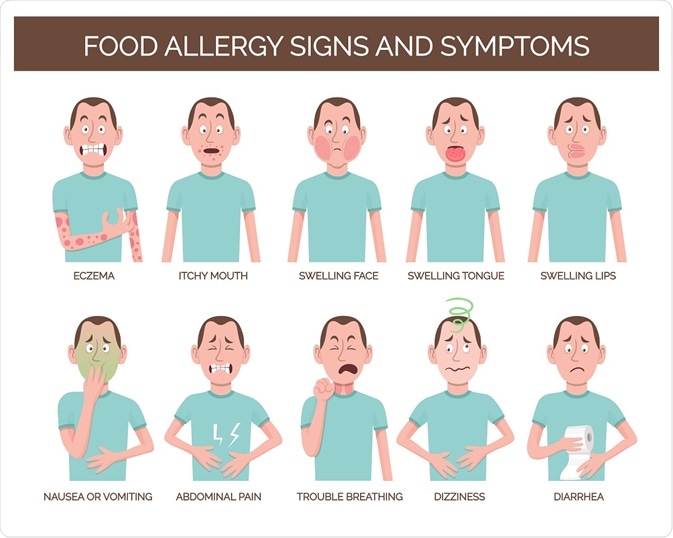
The most prevalent indications and symptoms of food allergy are:
- Pickle or irritation in the mouth
- Hives, eczema and itching
- Lip, cheek, tongue, neck or other body parts swelling
- Weeds, congestion of the nose or respiratory problems
- Diarrhoea, nausea, or vomiting.
- Distress, fainting or fainting
- Anaphylactic Application
- A severe allergic reaction named anaphylaxis may be triggered by food allergie in certain persons. This may lead to indications and symptoms of life threats, including:
- Airways restriction and strain
- A enlarged throat or a lump’s feeling that makes it hard to breathe
- Shock by a significant blood pressure decrease
- Quick pulse
- Dismay, lightheadedness or loss of awareness
Critical to anaphylaxis is emergency treatment. Anaphylaxis without treatment can lead to coma, or even death.
When to see a physician
See your doctor or allergist promptly after you eat, if you have any food allergy symptoms. See your doctor if possible when the allergic response happens. This helps to diagnose your doctor.

When you have a food allergy, a certain food or ingredient in your meals is incorrectly identified as hazardous. In respose, cells release an antibody called immunoglobulin E (IgE) in your immune system, to neutralise food or nutrients that cause allergies (the allergen).
The next time you eat as little of the same food, IgE antibodies will feel it and indicate that your immune system releases into your bloodstream a substance called histamine and other substances. These substances are symptomatic of allergies.
For adults, specific proteins induce the majority of food allergies in:
- Shrimp, lobster, and crab, for example, are shellfish.
- Peanuts are a delicious snack.
- Walnuts and pecans are examples of tree nuts.
- Fish
- Food allergies in children are frequently provoked by proteins found in:
- Peanuts are a delicious snack.
- Nuts from the trees
- Eggs
- Milk from a cow
- Wheat is a cereal grain.
- Soybeans
- Pollen-food allergy syndrome is a combination of allergies to pollen and foods.
- Pollen-food allergy syndrome, also known as oral allergy syndrome, affects a large number of people who suffer from hay fever. Certain fresh fruits and vegetables, as well as nuts and spices, can cause an allergic reaction in this condition, causing the mouth to tingle or itch. In severe cases, the reaction can cause throat swelling or even anaphylaxis.
Because proteins in certain fruits, vegetables, nuts, and spices are identical to allergy-causing proteins present in specific pollens, they elicit the reaction. Cross-reactivity is exemplified here.
Your symptoms may be less severe if you cook items that cause pollen-food allergy syndrome.